Beachwear fashion includes clothing and accessories designed for beaches, pools, coastal destinations, resorts, and warm-weather holidays. It ranges from swimwear and lightweight cover-ups to dresses, skirts, shirts, footwear, and coordinated accessories.
Categories such as Luxury Beachwear for Women, Designer Beachwear, Luxury Swimwear for Women, Designer Swimwear for Women, Luxury Resort Wear, and Designer Resort Wear for Women reflect the broad connection between beach clothing, travel, and contemporary fashion.
Context
Understanding Beachwear Fashion
Beachwear developed from the practical need for clothing that could be worn around water while also providing comfort and movement. Over time, coastal clothing became connected with leisure, tourism, resort culture, and seasonal fashion.
Modern beachwear can include several layers and clothing categories. Swimwear is generally intended for activities in or around water, while cover-ups and resort clothing can be used before and after swimming. Accessories such as hats, sandals, sunglasses, lightweight bags, and scarves can also form part of a beach outfit.
Luxury Beach Dresses and Luxury Beach Cover Ups illustrate how beach clothing has expanded beyond basic swimwear. These garments may use flowing silhouettes, decorative details, textured fabrics, or lightweight materials suited to warm environments.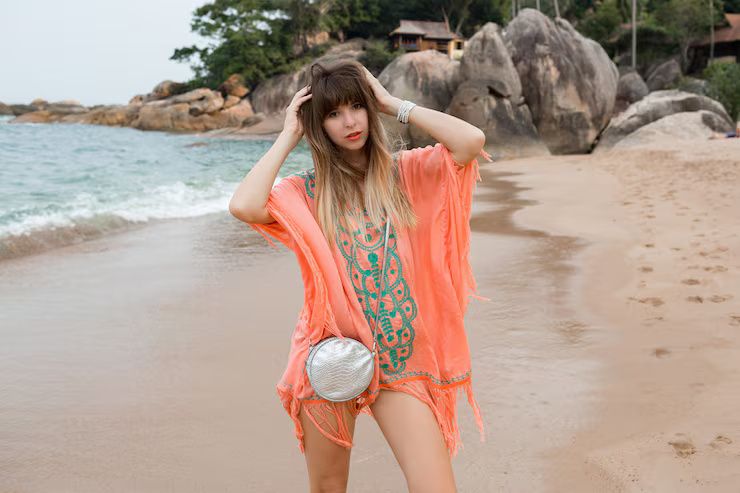
Main Beachwear Categories
Beachwear can be grouped according to its purpose, construction, and setting. Common categories include:
- Swimwear: Includes one-piece swimsuits, bikinis, tankinis, and other garments designed for water-related activities.
- Cover-ups: Include tunics, wraps, kaftans, shirts, and lightweight dresses worn over swimwear.
- Beach dresses: Usually use relaxed shapes and breathable fabrics for warm-weather environments.
- Resort wear: Includes coordinated clothing that can transition between beaches, restaurants, hotels, and other holiday settings.
- Accessories: Include hats, sandals, bags, sunglasses, and lightweight scarves.
Luxury Swimwear for Women may incorporate specialized fabrics, detailed construction, distinctive patterns, or fashion-oriented silhouettes. However, the term luxury describes a market segment rather than a standardized technical classification.
Materials and Construction
Material selection has an important effect on how beachwear behaves in warm, humid, and wet environments. Common textiles include cotton, linen, viscose, polyester, nylon, elastane, and blended fabrics.
Swimwear frequently incorporates stretch fibers because elasticity can support movement and fit. Fabric composition can also influence drying time, resistance to chlorine or salt water, opacity, and maintenance requirements.
Resort garments may use lighter woven materials that allow air movement. Linen and cotton are often associated with warm-weather clothing, while synthetic and blended fabrics may be selected for particular performance or construction characteristics.
| Beachwear category | Typical characteristics | Common setting |
|---|---|---|
| Swimwear | Stretch construction and water-oriented fabrics | Swimming, pools, beaches |
| Cover-ups | Lightweight and easy to layer | Beach, poolside |
| Beach dresses | Relaxed shapes and breathable fabrics | Coastal outings |
| Resort wear | Coordinated and adaptable clothing | Hotels, resorts, restaurants |
| Beach accessories | Practical and decorative elements | Outdoor and coastal settings |
Importance
Comfort in Warm Environments
Beach destinations often involve sunlight, heat, humidity, wind, and contact with water. Clothing that is lightweight and appropriate for the environment can influence comfort during extended outdoor activities.
Fit is also important. Swimwear should allow normal movement without creating excessive restriction, while cover-ups should be appropriate for the activities and climate involved.
Clothing for Different Activities
A beach holiday can involve much more than swimming. People may move between a beach, pool, restaurant, hotel, sightseeing location, or evening event during the same day.
This has contributed to the development of Luxury Resort Wear and Designer Resort Wear for Women as broader categories. These garments can include flowing dresses, coordinated sets, lightweight trousers, shirts, skirts, and layering pieces.
Fashion and Personal Style
Beachwear provides opportunities to combine practical clothing with colors, patterns, silhouettes, and accessories. Designer Beachwear may incorporate particular design themes, while Luxury Beachwear for Women can include more detailed construction or specialized materials.
Fashion preferences also vary by destination. Tropical locations, Mediterranean resorts, and cooler coastal regions can require different combinations of fabrics and layers.
Travel and Honeymoon Clothing
Travelers often need clothing that can work across several situations while taking up limited luggage space. This has contributed to interest in versatile garments that can be worn in different combinations.
Luxury Honeymoon Beachwear is one example of destination-specific fashion planning. It can include swimwear, cover-ups, lightweight dresses, evening resort clothing, and accessories selected around a particular climate and itinerary.
Recent Updates
Blending Resort and Everyday Fashion
From 2024 through 2026, beachwear trends have continued to overlap with everyday and vacation wardrobes. Loose shirts, wide-leg trousers, maxi dresses, lightweight skirts, and coordinated sets can move between beach and resort environments.
This approach reduces the distinction between dedicated beach clothing and general warm-weather clothing. A garment may therefore be styled with swimwear during the day and paired with different accessories for a restaurant or evening setting.
Changes in Swimwear Design
Contemporary swimwear continues to include a wide range of silhouettes. One-piece styles, bikinis, high-waisted designs, asymmetric shapes, and fuller-coverage options can appear across different collections.
Designers are also experimenting with adjustable straps, textured surfaces, contrasting panels, and varied waistlines. These developments provide different options for fit and personal styling without creating a single standard approach.
Material Development
Beachwear manufacturers and designers continue to examine recycled fibers, alternative textile sources, and production methods associated with resource efficiency. Recycled polyester and regenerated materials appear in some apparel collections.
Environmental characteristics depend on the complete material and manufacturing process. A particular fabric label does not by itself describe the full environmental impact of a garment.
Resort Accessories and Layering
Another continuing trend is coordinated dressing. Beachwear collections may include matching garments, such as a swimsuit paired with a shirt, skirt, scarf, or cover-up.
Accessories can also change the visual character of an outfit. Wide-brimmed hats, woven bags, flat sandals, and sunglasses are commonly associated with coastal clothing, although their practical suitability varies according to weather and activity.
Laws or Policies
Clothing and Consumer Rules in India
In India, apparel and textile products are subject to consumer protection, labeling, product information, taxation, import, and other applicable regulatory requirements. The exact obligations depend on the product category, materials, manufacturing process, and business activity.
The Consumer Protection Act, 2019 provides a general framework for consumer rights and addresses misleading representations. Descriptions of clothing characteristics should therefore accurately represent relevant product information.
Textile Labeling
Apparel labels can provide information about fiber composition, manufacturer or importer details, size, and care instructions, depending on the applicable requirements. Such information helps consumers understand how garments should be maintained.
Businesses involved in importing or distributing beachwear may also need to comply with applicable customs and documentation requirements. Regulatory requirements can change, so current government notifications and applicable standards should be consulted for specific situations.
Product Safety and Environmental Considerations
Beachwear may come into contact with skin, water, sunscreen, salt, chlorine, and other environmental factors. Appropriate material selection and accurate care information can help users understand how a garment is intended to be maintained.
Environmental rules can also affect textile manufacturing, packaging, waste handling, and chemical use. These requirements vary according to the activity and location involved.
Tools and Resources
Clothing Measurement Guides
Garment measurement charts can help readers compare body measurements with a particular sizing system. Swimwear sizing can vary considerably because stretch, garment construction, and intended fit differ between manufacturers.
Useful measurements may include:
- Bust or chest circumference
- Waist circumference
- Hip circumference
- Torso length for one-piece swimwear
- Garment length
- Inseam for trousers
Measurements should be compared with the specific sizing information provided for a garment rather than assuming that one numerical size is identical across all collections.
Fabric and Care Information
Fabric labels and care instructions provide useful information about washing, drying, ironing, and other maintenance requirements. This is particularly relevant for swimwear because chlorine, salt water, sunscreen, and prolonged sunlight can affect some materials.
Travel Planning Resources
Weather forecasts, destination climate information, luggage planners, and travel packing checklists can help determine which beachwear layers are appropriate for a trip. Destination-specific information is particularly useful when a journey includes several climates or activities.
Government consumer-protection resources and textile-related regulatory publications can also help readers understand general product-labeling and consumer information requirements.
FAQs
What is Luxury Beachwear for Women?
Luxury Beachwear for Women refers to beach and coastal clothing positioned within the luxury fashion segment. It can include swimwear, cover-ups, dresses, lightweight separates, and accessories, with characteristics varying among designers and collections.
What is the difference between Designer Beachwear and regular beach clothing?
Designer Beachwear generally places greater emphasis on design direction, materials, styling, and brand identity. The construction, fabric, fit, and intended use can differ substantially between individual garments.
What should I consider when choosing Luxury Swimwear for Women?
Consider fit, fabric composition, stretch, intended activity, coverage, care requirements, and comfort in the expected climate. Swimwear should allow normal movement and fit securely without excessive restriction.
What is Designer Resort Wear for Women?
Designer Resort Wear for Women is clothing designed around resort and vacation settings. It can include dresses, shirts, trousers, skirts, coordinated sets, and lightweight layers that may be worn around hotels, beaches, restaurants, and other leisure environments.
What is suitable Luxury Honeymoon Beachwear?
Luxury Honeymoon Beachwear can include swimwear, cover-ups, beach dresses, lightweight resort clothing, and accessories suited to the destination. Appropriate choices depend on climate, planned activities, local customs, and individual preferences.
Conclusion
Beachwear fashion combines practical clothing for coastal environments with contemporary design and personal style. The category includes swimwear, cover-ups, dresses, resort clothing, accessories, and destination-specific outfits. Recent developments include greater overlap between resort and everyday clothing, varied swimwear silhouettes, new textile approaches, and coordinated vacation wardrobes. In India, applicable consumer, labeling, textile, import, and environmental requirements can influence how beachwear is manufactured, described, and distributed.